Health benefits of guava fruit
 Guava is another tropical
fruit rich in nutrition. With its unique flavor, taste, and health-promoting
qualities, the fruit easily fits in the new functional foods category, often
called “super-fruits.”It is an evergreen, tropical
shrub or low-growing small tree probably originated in Middle Americas. Guavas
actually thrive in both humid and dry climates and can tolerate brief periods
of cold spells, but can survive only a few degrees of frost. Adaptability makes
it a favorite commercial crop in some tropical areas.Botanically, this wonderful
fruit belongs within the family of Myrtaceae of the genus: Psidium. Scientific
name:Psidium guajava.During each season, the guava tree bears numerous round,
ovoid or pear-shaped fruits that are about 5-10 cm long and weigh around 50–200
g. Different cultivars are grown all over the world which, vary widely in
flavor, pulp color, and seediness.
Guava is another tropical
fruit rich in nutrition. With its unique flavor, taste, and health-promoting
qualities, the fruit easily fits in the new functional foods category, often
called “super-fruits.”It is an evergreen, tropical
shrub or low-growing small tree probably originated in Middle Americas. Guavas
actually thrive in both humid and dry climates and can tolerate brief periods
of cold spells, but can survive only a few degrees of frost. Adaptability makes
it a favorite commercial crop in some tropical areas.Botanically, this wonderful
fruit belongs within the family of Myrtaceae of the genus: Psidium. Scientific
name:Psidium guajava.During each season, the guava tree bears numerous round,
ovoid or pear-shaped fruits that are about 5-10 cm long and weigh around 50–200
g. Different cultivars are grown all over the world which, vary widely in
flavor, pulp color, and seediness.
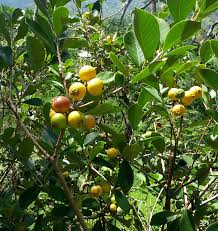 The fruit is soft when ripe
with sweet musky aroma and creamy in texture. Internally, the flesh varies in
color depending up on the cultivar and may be white, pink, yellow, or red. Ripe
fruits have rich flavor with sweet-tart taste. Each fruit contains numerous
tiny, semi-hard edible seeds, concentrated especially at its center.Guavas are low in calories
and fats but contain several vital vitamins, minerals, and antioxidant
poly-phenolic and flavonoid compounds that play a pivotal role in prevention of
cancers, anti-aging, immune-booster, etc.
The fruit is soft when ripe
with sweet musky aroma and creamy in texture. Internally, the flesh varies in
color depending up on the cultivar and may be white, pink, yellow, or red. Ripe
fruits have rich flavor with sweet-tart taste. Each fruit contains numerous
tiny, semi-hard edible seeds, concentrated especially at its center.Guavas are low in calories
and fats but contain several vital vitamins, minerals, and antioxidant
poly-phenolic and flavonoid compounds that play a pivotal role in prevention of
cancers, anti-aging, immune-booster, etc.
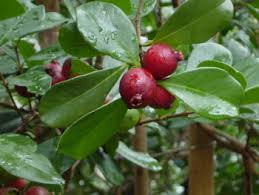 The
fruit is very rich source of soluble dietary fiber (5.4 g per 100 g of fruit,
about 14% of DRA), which makes it a good bulk
laxative. The fiber content helps protect the colon mucous membrane by
decreasing exposure time to toxins as well as binding to cancer-causing
chemicals in the colon. Guava-fruit
is an excellent source of antioxidant vitamin-C. 100 g fresh
fruit provides 228 mg of this vitamin, more than three times the DRI
(daily-recommended intake). Outer thick rind contains exceptionally higher
levels of vitamin C than central pulp. Scientific
studies shown that regular consumption of fruits rich in
vitamin C helps the body develop resistance against infectious agents and
scavenge cancer causing harmful free radicals from the body. Further, the
vitamin is required for collagen synthesis within the body. Collagen is the
main structural protein in the human body required for maintaining the
integrity of blood vessels, skin, organs, and bones. The
fruit is a very good source of Vitamin-A, and flavonoids like beta-carotene,
lycopene, lutein and cryptoxanthin. The compounds are known to have antioxidant
properties and are essential for optimum health. Further, vitamin-A is also
required for maintaining healthy mucus membranes and skin. Consumption of
natural fruits rich in carotene is known to protect from lung and oral cavity
cancers. 100
g of pink guava fruit provides 5204 µg of lycopene, nearly twice the
amount that in tomatoes. (100 g tomato contains 2573 µg of lycopene). Studies
suggest that lycopene in pink guavas prevents skin damage from UV rays and
offers protection from prostate cancer. Fresh
fruit is a very rich source of potassium. It contains more potassium than other
fruits like banana weight per weight. Potassium is an important component of
cell and body fluids that helps controlling heart rate and blood pressure. Further,
the fruit is also a moderate source of B-complex vitamins such as
pantothenic acid, niacin, vitamin-B6 (pyridoxine), vitamin E and K, as well as
minerals like magnesium, copper, and manganese. Manganese is used by the body
as a co-factor for the antioxidant enzyme, superoxide dismutase. Copper is
required for the production of red blood cells.
The
fruit is very rich source of soluble dietary fiber (5.4 g per 100 g of fruit,
about 14% of DRA), which makes it a good bulk
laxative. The fiber content helps protect the colon mucous membrane by
decreasing exposure time to toxins as well as binding to cancer-causing
chemicals in the colon. Guava-fruit
is an excellent source of antioxidant vitamin-C. 100 g fresh
fruit provides 228 mg of this vitamin, more than three times the DRI
(daily-recommended intake). Outer thick rind contains exceptionally higher
levels of vitamin C than central pulp. Scientific
studies shown that regular consumption of fruits rich in
vitamin C helps the body develop resistance against infectious agents and
scavenge cancer causing harmful free radicals from the body. Further, the
vitamin is required for collagen synthesis within the body. Collagen is the
main structural protein in the human body required for maintaining the
integrity of blood vessels, skin, organs, and bones. The
fruit is a very good source of Vitamin-A, and flavonoids like beta-carotene,
lycopene, lutein and cryptoxanthin. The compounds are known to have antioxidant
properties and are essential for optimum health. Further, vitamin-A is also
required for maintaining healthy mucus membranes and skin. Consumption of
natural fruits rich in carotene is known to protect from lung and oral cavity
cancers. 100
g of pink guava fruit provides 5204 µg of lycopene, nearly twice the
amount that in tomatoes. (100 g tomato contains 2573 µg of lycopene). Studies
suggest that lycopene in pink guavas prevents skin damage from UV rays and
offers protection from prostate cancer. Fresh
fruit is a very rich source of potassium. It contains more potassium than other
fruits like banana weight per weight. Potassium is an important component of
cell and body fluids that helps controlling heart rate and blood pressure. Further,
the fruit is also a moderate source of B-complex vitamins such as
pantothenic acid, niacin, vitamin-B6 (pyridoxine), vitamin E and K, as well as
minerals like magnesium, copper, and manganese. Manganese is used by the body
as a co-factor for the antioxidant enzyme, superoxide dismutase. Copper is
required for the production of red blood cells.
Prof. John Kurakar


No comments:
Post a Comment