"D'DAY- EMOTIONAL
TRIBUTE ON 'D'DAY
The
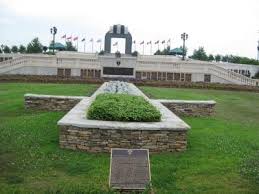
Normandy American Cemetery, overlooking Omaha Beach and the English Channel,
was established on June 8, 1944, as the first U.S. cemetery in Europe during
World War II. It holds the graves of more than 9,300 U.S. servicemen who died
in the D-Day invasion or subsequent missions.
 During World War II
(1939-1945), the Battle of Normandy, which lasted from June 1944 to August
1944, resulted in the Allied liberation of Western Europe from Nazi Germany’s
control. Codenamed Operation Overlord, the battle began on June 6, 1944, also
known as D-Day, when some 156,000 American, British and Canadian forces landed
on five beaches along a 50-mile stretch of the heavily fortified coast of
France’s Normandy region. The invasion was one of the largest amphibious
military assaults in history and required extensive planning. Prior to D-Day,
the Allies conducted a large-scale deception campaign designed to mislead the
Germans about the intended invasion target. By late August 1944, all of
northern France had been liberated, and by the following spring the Allies had
defeated the Germans. The Normandy landings have been called the beginning of
the end of war in Europe.
During World War II
(1939-1945), the Battle of Normandy, which lasted from June 1944 to August
1944, resulted in the Allied liberation of Western Europe from Nazi Germany’s
control. Codenamed Operation Overlord, the battle began on June 6, 1944, also
known as D-Day, when some 156,000 American, British and Canadian forces landed
on five beaches along a 50-mile stretch of the heavily fortified coast of
France’s Normandy region. The invasion was one of the largest amphibious
military assaults in history and required extensive planning. Prior to D-Day,
the Allies conducted a large-scale deception campaign designed to mislead the
Germans about the intended invasion target. By late August 1944, all of
northern France had been liberated, and by the following spring the Allies had
defeated the Germans. The Normandy landings have been called the beginning of
the end of war in Europe.

 After World War II began, Germany invaded and occupied
northwestern France beginning in May 1940. The Americans entered the war in
December 1941, and by 1942 they and the British (who had been evacuated from
the beaches of Dunkirk in May 1940 after being cut off by the Germans in the
Battle of France) were considering the possibility of a major Allied invasion
across the English Channel. The following year, Allied plans for a
cross-Channel invasion began to ramp up. In November 1943, Adolf Hitler (1889-1945), who was aware of the threat of an
invasion along France’s northern coast, put Erwin Rommel (1891-1944) in charge of spearheading defense operations
in the region, even though the Germans did not know exactly where the Allies
would strike. Hitler charged Rommel with finishing the Atlantic Wall, a
2,400-mile fortification of bunkers, landmines and beach and water obstacles.
After World War II began, Germany invaded and occupied
northwestern France beginning in May 1940. The Americans entered the war in
December 1941, and by 1942 they and the British (who had been evacuated from
the beaches of Dunkirk in May 1940 after being cut off by the Germans in the
Battle of France) were considering the possibility of a major Allied invasion
across the English Channel. The following year, Allied plans for a
cross-Channel invasion began to ramp up. In November 1943, Adolf Hitler (1889-1945), who was aware of the threat of an
invasion along France’s northern coast, put Erwin Rommel (1891-1944) in charge of spearheading defense operations
in the region, even though the Germans did not know exactly where the Allies
would strike. Hitler charged Rommel with finishing the Atlantic Wall, a
2,400-mile fortification of bunkers, landmines and beach and water obstacles.
D-DAY
LANDINGS: JUNE 6, 1944
 By dawn on June 6,
thousands of paratroopers and glider troops were already on the ground behind
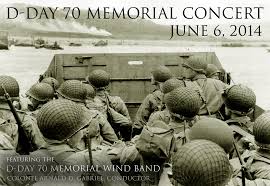
enemy lines, securing bridges and exit roads. The amphibious invasions began at
6:30 a.m. The British and Canadians overcame light opposition to capture
beaches codenamed Gold, Juno and Sword, as did the Americans at Utah Beach. U.S. forces faced heavy
resistance at Omaha Beach, where there were over 2,000 American casualties.
However, by day’s end, approximately 156,000 Allied troops had successfully
stormed Normandy’s beaches.According to some estimates, more than 4,000 Allied
troops lost their lives in the D-Day invasion, with thousands more wounded or
missing.Less than a week later, on
June 11, the beaches were fully secured and over 326,000 troops, more than
50,000 vehicles and some 100,000 tons of equipment had landed at Normandy.For their part, the Germans
suffered from confusion in the ranks and the absence of celebrated commander
Rommel, who was away on leave. At first, Hitler, believing the invasion was a
feint designed to distract the Germans from a coming attack north of the Seine
River, refused to release nearby divisions to join the counterattack. Reinforcements
had to be called from further afield, causing delays. He also hesitated in
calling for armored divisions to help in the defense. Moreover, the Germans
were hampered by effective Allied air support, which took out many key bridges
and forced the Germans to take long detours, as well as efficient Allied naval
support, which helped protect advancing Allied troops.In the ensuing weeks, the
Allies fought their way across the Normandy countryside in the face of
determined German resistance, as well as a dense landscape of marshes and
hedgerows. By the end of June, the Allies had seized the vital port of
Cherbourg, landed approximately 850,000 men and 150,000 vehicles in Normandy,
and were poised to continue their march across France.VICTORY IN NORMANDYBy the end of August 1944,
the Allies had reached the Seine River, Paris was liberated and the Germans had
been removed from northwestern France, effectively concluding the Battle of
Normandy. The Allied forces then prepared to enter Germany, where they would
meet up with Soviet troops moving in from the east.The Normandy invasion began
to turn the tide against the Nazis. A significant psychological blow, it also
prevented Hitler from sending troops from France to build up his Eastern Front
against the advancing Soviets. The following spring, on May 8, 1945, the Allies
formally accepted the unconditional surrender of Nazi Germany. Hitler had
committed suicide a week earlier, on April 30.D-Day
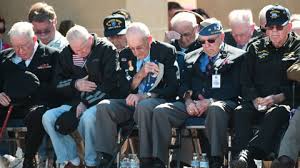
veterans bade an emotional farewell to the Normandy beaches on Friday after an
outpouring of tributes from world leaders for their courage during a battle
that liberated Europe from Nazism.Some
1,800 veterans, the youngest well into their 80s, rubbed shoulders with
royalty, presidents and prime ministers as the world marked a historic day on
which, in the words of France's leader, "the fate of humanity was played
out and decided."Resplendent in military uniform with medals glinting in
the Normandy sun, the veterans, many now wheelchair-bound, struggled to hold
back the emotion during events recalling the largest seaborne assault in
military history on June 6, 1944.Leading
the tributes, a visibly moved US President Barack Obama said he was "truly
humbled" by their presence, painting a picture of the carnage and courage
as troops scrambled out of boats and piled out of low-flying planes into a hail
of Nazi machine-gun fire."By daybreak, blood soaked the water, and bombs
broke the sky. Thousands of paratroopers had dropped into the wrong landing
sites; thousands of rounds bit into flesh and sand. Entire companies' worth of
men fell in minutes. Hell's Beach had earned its name."More
than 156,000 troops waded or parachuted onto French soil on June 6, 1944.
Nearly 4,500 would be dead by the end of the day. Obama said the sacrifice and
bravery of those men, then in their teens and 20s, had breached "Hitler's
Wall" and ushered in today's era of democracy and freedom.The few
remaining survivors of that day struggled painfully to their feet as the
president's warm tribute sparked a lengthy standing ovation.French
President Francois Hollande said the veterans' spirit would always grace the
northern beaches in his country, pledging: "The gratitude of France will
never, ever end."As the sun set on this longest day, a light came on
across a Europe enslaved," said Hollande, who also paid tribute to the
"courage of the Red Army" and the victims of Nazi Germany."On
these now peaceful beaches, no matter how much time has passed, only one wind
blows -- the wind of freedom," said the French president.
By dawn on June 6,
thousands of paratroopers and glider troops were already on the ground behind
enemy lines, securing bridges and exit roads. The amphibious invasions began at
6:30 a.m. The British and Canadians overcame light opposition to capture
beaches codenamed Gold, Juno and Sword, as did the Americans at Utah Beach. U.S. forces faced heavy
resistance at Omaha Beach, where there were over 2,000 American casualties.
However, by day’s end, approximately 156,000 Allied troops had successfully
stormed Normandy’s beaches.According to some estimates, more than 4,000 Allied
troops lost their lives in the D-Day invasion, with thousands more wounded or
missing.Less than a week later, on
June 11, the beaches were fully secured and over 326,000 troops, more than
50,000 vehicles and some 100,000 tons of equipment had landed at Normandy.For their part, the Germans
suffered from confusion in the ranks and the absence of celebrated commander
Rommel, who was away on leave. At first, Hitler, believing the invasion was a
feint designed to distract the Germans from a coming attack north of the Seine
River, refused to release nearby divisions to join the counterattack. Reinforcements
had to be called from further afield, causing delays. He also hesitated in
calling for armored divisions to help in the defense. Moreover, the Germans
were hampered by effective Allied air support, which took out many key bridges
and forced the Germans to take long detours, as well as efficient Allied naval
support, which helped protect advancing Allied troops.In the ensuing weeks, the
Allies fought their way across the Normandy countryside in the face of
determined German resistance, as well as a dense landscape of marshes and
hedgerows. By the end of June, the Allies had seized the vital port of
Cherbourg, landed approximately 850,000 men and 150,000 vehicles in Normandy,
and were poised to continue their march across France.VICTORY IN NORMANDYBy the end of August 1944,
the Allies had reached the Seine River, Paris was liberated and the Germans had
been removed from northwestern France, effectively concluding the Battle of
Normandy. The Allied forces then prepared to enter Germany, where they would
meet up with Soviet troops moving in from the east.The Normandy invasion began
to turn the tide against the Nazis. A significant psychological blow, it also
prevented Hitler from sending troops from France to build up his Eastern Front
against the advancing Soviets. The following spring, on May 8, 1945, the Allies
formally accepted the unconditional surrender of Nazi Germany. Hitler had
committed suicide a week earlier, on April 30.D-Day
veterans bade an emotional farewell to the Normandy beaches on Friday after an
outpouring of tributes from world leaders for their courage during a battle
that liberated Europe from Nazism.Some
1,800 veterans, the youngest well into their 80s, rubbed shoulders with
royalty, presidents and prime ministers as the world marked a historic day on
which, in the words of France's leader, "the fate of humanity was played
out and decided."Resplendent in military uniform with medals glinting in
the Normandy sun, the veterans, many now wheelchair-bound, struggled to hold
back the emotion during events recalling the largest seaborne assault in
military history on June 6, 1944.Leading
the tributes, a visibly moved US President Barack Obama said he was "truly
humbled" by their presence, painting a picture of the carnage and courage
as troops scrambled out of boats and piled out of low-flying planes into a hail
of Nazi machine-gun fire."By daybreak, blood soaked the water, and bombs
broke the sky. Thousands of paratroopers had dropped into the wrong landing
sites; thousands of rounds bit into flesh and sand. Entire companies' worth of
men fell in minutes. Hell's Beach had earned its name."More
than 156,000 troops waded or parachuted onto French soil on June 6, 1944.
Nearly 4,500 would be dead by the end of the day. Obama said the sacrifice and
bravery of those men, then in their teens and 20s, had breached "Hitler's
Wall" and ushered in today's era of democracy and freedom.The few
remaining survivors of that day struggled painfully to their feet as the
president's warm tribute sparked a lengthy standing ovation.French
President Francois Hollande said the veterans' spirit would always grace the
northern beaches in his country, pledging: "The gratitude of France will
never, ever end."As the sun set on this longest day, a light came on
across a Europe enslaved," said Hollande, who also paid tribute to the
"courage of the Red Army" and the victims of Nazi Germany."On
these now peaceful beaches, no matter how much time has passed, only one wind
blows -- the wind of freedom," said the French president.
 After
Hollande's speech, gas flares sent fire and plumes of black smoke billowing
into the air as images from the day played on giant screens and performers
moved across the beach, many falling slowly to the ground in a moving
reenactment of the horror 70 years ago.In a ceremony full of colourful military pomp, Hollande
welcomed a score of world leaders one-by-one as they processed up a red carpet,
flanked by young children and a guard of honour.The biggest cheers were reserved for Obama and Queen
Elizabeth II, resplendent in a lime-green coat and matching hat and -- at the
age of 88 -- on an increasingly rare foreign trip.But the stars of the show
were undoubtedly the veterans, who lined up to receive some of the leaders as
they made their way to the stands.Earlier in the day, one British veteran,
89-year-old Ken Godfrey, was applauded by well-wishers who shouted
"bravo" and "thank you" as, medals clinking on his chest,
he walked the mile-long path to Bayeux cemetery for a service."My
main memory is wading through the sea with water up to my chest," he told
AFP. "But I don't like to talk about the fighting. If people ask, I just
say we had a hairy time. But I'm lucky that I survived."Bob Cowper, a
91-year-old Australian night fighter pilot, met his current prime minister Tony
Abbott at the Bayeux ceremonies and told AFP that he flew over the beaches on
D-Day as the fighting raged below."Looking down, even though we were
making a contribution, I remember feeling empathy for all the poor buggers
fighting on the ground."
After
Hollande's speech, gas flares sent fire and plumes of black smoke billowing
into the air as images from the day played on giant screens and performers
moved across the beach, many falling slowly to the ground in a moving
reenactment of the horror 70 years ago.In a ceremony full of colourful military pomp, Hollande
welcomed a score of world leaders one-by-one as they processed up a red carpet,
flanked by young children and a guard of honour.The biggest cheers were reserved for Obama and Queen
Elizabeth II, resplendent in a lime-green coat and matching hat and -- at the
age of 88 -- on an increasingly rare foreign trip.But the stars of the show
were undoubtedly the veterans, who lined up to receive some of the leaders as
they made their way to the stands.Earlier in the day, one British veteran,
89-year-old Ken Godfrey, was applauded by well-wishers who shouted
"bravo" and "thank you" as, medals clinking on his chest,
he walked the mile-long path to Bayeux cemetery for a service."My
main memory is wading through the sea with water up to my chest," he told
AFP. "But I don't like to talk about the fighting. If people ask, I just
say we had a hairy time. But I'm lucky that I survived."Bob Cowper, a
91-year-old Australian night fighter pilot, met his current prime minister Tony
Abbott at the Bayeux ceremonies and told AFP that he flew over the beaches on
D-Day as the fighting raged below."Looking down, even though we were
making a contribution, I remember feeling empathy for all the poor buggers
fighting on the ground."
 It was
Cowper's first trip back to Normandy and he beamed with pride at being present at the ceremonies."It's wonderful as an old man of 91 - it's like coming
home."While world leaders did their best to concentrate on the solemnity
of the occasion, diplomatic wrangling over the Ukraine crisis provided an
unwanted backdrop.A frantic round of separate talks involving Obama, Hollande,
Russian President Vladimir Putin and the leaders of Ukraine and Germany appeared
to yield something of a breakthrough.Putin, brought out of the diplomatic
deep-freeze for the occasion, said his talks with Western leaders were
"positive" and issued a joint call with Ukraine's president-elect for
an end to bloodshed in the east of the country.Rudolf Willem, 91, from the
Netherlands, told AFP: "I liked everything but I thought that Mr Hollande
was too long."
It was
Cowper's first trip back to Normandy and he beamed with pride at being present at the ceremonies."It's wonderful as an old man of 91 - it's like coming
home."While world leaders did their best to concentrate on the solemnity
of the occasion, diplomatic wrangling over the Ukraine crisis provided an
unwanted backdrop.A frantic round of separate talks involving Obama, Hollande,
Russian President Vladimir Putin and the leaders of Ukraine and Germany appeared
to yield something of a breakthrough.Putin, brought out of the diplomatic
deep-freeze for the occasion, said his talks with Western leaders were
"positive" and issued a joint call with Ukraine's president-elect for
an end to bloodshed in the east of the country.Rudolf Willem, 91, from the
Netherlands, told AFP: "I liked everything but I thought that Mr Hollande
was too long."
Prof. John Kurakar


No comments:
Post a Comment