PLUM FRUIT

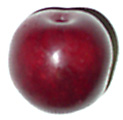 Wonderfully
delicious and juicy plums are botanically belonging within the family of
Rosaceae.The plant is best described as small tree or large shrub and widely
cultivated in the United States, Europe, Japan and China. Many cultivars of
plums are grown all over the world, which differ in their color, size and
growing characteristics based upon their country of origin. Generally, each
variety of the plum trees bears numerous, almost uniform sized fruits between
May and September months. Each berry is about the size
of medium-sized tomato. measuring about
5-6 cm in diameter and weigh about 50-70 g. It has central depression at the
stem side. Internally, the pulp is juicy and varies widely from creamy yellow,
crimson, light-blue or light-green in color depending upon the cultivar type.There
is centrally placed single, smooth but hard stone-like seed. Seeds are
inedible.It has sweet and tart taste pulp with pleasant aroma. Some
common cultivars of plums are: cherry plum, damson, blackth
Wonderfully
delicious and juicy plums are botanically belonging within the family of
Rosaceae.The plant is best described as small tree or large shrub and widely
cultivated in the United States, Europe, Japan and China. Many cultivars of
plums are grown all over the world, which differ in their color, size and
growing characteristics based upon their country of origin. Generally, each
variety of the plum trees bears numerous, almost uniform sized fruits between
May and September months. Each berry is about the size
of medium-sized tomato. measuring about
5-6 cm in diameter and weigh about 50-70 g. It has central depression at the
stem side. Internally, the pulp is juicy and varies widely from creamy yellow,
crimson, light-blue or light-green in color depending upon the cultivar type.There
is centrally placed single, smooth but hard stone-like seed. Seeds are
inedible.It has sweet and tart taste pulp with pleasant aroma. Some
common cultivars of plums are: cherry plum, damson, blackth
Health benefits of Plums
Delicious, fleshy,
succulent plums are low in calories (46 calories per 100 g) and contain no
saturated fats; however, contain numerous health promoting compounds, minerals
and vitamins.Certain health benefiting compounds present in the plum fruits,
such as dietary fiber, sorbitol, andisatin are
known to help regulate the functioning of the digestive system and thereby
relieve constipation conditions.Total antioxidant strength of plums measured in
terms of ORAC (Oxygen
radical absorbance capacity) is 6259 µmol TE/100 g. Fresh berries are a
moderate source of vitamin C,
which is also a powerful natural antioxidant. Consumption of foods rich in vitamin C helps the body develop resistance against infectious agents, counter
inflammation and scavenge harmful free radicals.
 Fresh plums, especially
yellow Mirabelle type, are a moderate source of vitamin A and beta carotene.
Vitamin A is essential for good eye sight. It is also required for maintaining
healthy mucus membranes and skin. Consumption of natural fruits rich in vitamin
A has found to protect from lung and oral cavity cancers.The fruit is also good
in health promoting flavonoid poly phenolic antioxidants such as lutein,
cryptoxanthin and zea-xanthin in significant amounts. These compounds help act
as scavengers against oxygen-derived free radicals and reactive oxygen species
(ROS) that play a role in aging and various disease processes. Zea-xanthin,
an important dietary carotenoid selectively absorbed into the retinal macula
lutea where it is thought to provide antioxidant and protective UV
light-filtering functions.
Fresh plums, especially
yellow Mirabelle type, are a moderate source of vitamin A and beta carotene.
Vitamin A is essential for good eye sight. It is also required for maintaining
healthy mucus membranes and skin. Consumption of natural fruits rich in vitamin
A has found to protect from lung and oral cavity cancers.The fruit is also good
in health promoting flavonoid poly phenolic antioxidants such as lutein,
cryptoxanthin and zea-xanthin in significant amounts. These compounds help act
as scavengers against oxygen-derived free radicals and reactive oxygen species
(ROS) that play a role in aging and various disease processes. Zea-xanthin,
an important dietary carotenoid selectively absorbed into the retinal macula
lutea where it is thought to provide antioxidant and protective UV
light-filtering functions.
Plums are plentiful in
minerals like potassium, fluoride and iron. Iron is requiredforred blood cell
formation. Potassium is an important component of cell and body fluids that
helps controlling heart rate and blood pressure.In addition, the berries are
moderate sources in B-complex groups of vitamins such as niacin, vitamin B-6
and pantothenic acid. These vitamins are acting as cofactors help the body
metabolize carbohydrates, proteins and fats. They also provide about 5% RDA
levels of vitamin K. Vitamin K is essential for many clotting factors function
in the blood as well as in bone metabolism and help reduce Alzheimer's disease.
Prof. John Kurakar


No comments:
Post a Comment